

As Europe’s electricity system becomes more digitalised, decentralised and interconnected, research and innovation are playing a key role in developing the technologies needed for the grids of the future.
Through Horizon Europe Energy, the EU supports research projects and innovative solutions that help address some of the main challenges facing electricity networks today, from integrating growing shares of renewable energy and managing increasingly complex electricity flows to improving grid flexibility, resilience and efficiency.
Across Europe, Horizon Europe-funded projects are developing and testing advanced smart grid technologies, digital tools and new approaches to grid management that can help modernise electricity infrastructure and support the clean energy transition.
The technologies presented below illustrate how research and innovation are helping prepare Europe’s electricity networks for a more flexible, reliable and future-ready energy system.
Types of technologies
1. AC Power Transformer (with Tap Changer)
As electricity systems integrate growing shares of renewable energy and decentralised generation, maintaining stable voltage levels across the grid is becoming increasingly complex. AC Power Transformers equipped with tap changers are electrical devices that help address this challenge, as they convert voltage levels in power systems while regulating grid voltage. Unlike conventional transformers with a fixed voltage transformation ratio, transformers equipped with tap changers can dynamically adapt to fluctuations in network voltage due to changes in electricity demand and generation, adjusting their output voltage. This helps maintain stable voltage levels, improve power quality and support reliable operation of transmission and distribution networks. In addition to the components of a standard transformer, these units include an on-load or off-load tap changer mechanism, voltage monitoring equipment and control systems enabling automated voltage regulation. Depending on network conditions and voltage regulation requirements, transformers equipped with tap changers can improve voltage regulation accuracy by roughly 10-20%, helping reduce voltage deviations, improve grid stability and overall grid efficiency. |
 |
EU-SysFlex
Pan-European system with an efficient coordinated use of flexibilities for the integration of a large share of RES (EU-SysFlex #773505)
Forecast: Data, Methods and Processing. A common description
More about the project
R2D2
Reliability, Resilience and Defense technology for the griD,
R2D2 ecosystem integration and testing
More about the project
CoordiNet
Large scale campaigns to demonstrate how TSO-DSO shall act in a coordinated manner to procure grid services in the most reliable and efficient way.
Scalability and replicability analysis of the market platform and standardized products
More about the project
FLEXIGRID
Interoperable solutions for implementing holistic FLEXIbility services in the distribution GRID.
Publishable report on physical architecture developments
More about the project
2. Voltage Source Converters (VSC)
As Europe’s electricity system becomes more interconnected and increasingly reliant on renewable energy, electricity networks need technologies capable of managing power flows more flexibly and efficiently. Voltage Source Converters (VSC) are advanced power-electronic devices that enable bidirectional conversion between alternating current (AC) and direct current (DC) power, while actively controlling voltage magnitude, phase and power flow. Their fast and precise response capabilities support more stable, flexible and efficient grid operation. Depending on those conditions, VSC deployment can improve transmission flexibility and controllability, enabling up to 15-30% increased transmission capacity, more efficient integration of renewable energy sources, enhanced power flow control and improved grid stability. |
 |
PROMOTioN
Progress on Meshed HVDC Offshore Transmission Networks
- Detailed description of the requirements that can be expected per work package
- Report with a synthesis of the available studies on offshore meshed HVDC grids and related barriers/gaps at the inception of the project
- Detailed functional requirements to WPPs
- Report with the compliance test procedures for DR and VSC connected WPPs
- List of requirement recommendations to adapt and extent existing grid codes
- Harmonization catalogue
- Report on harmonization of HVDC systems (RWTH M46)
- Documentation of analytical approach
SCARLET
Superconducting cables for sustainable energy transition
InterOPERA
Enabling interoperability of multi-vendor HVDC grids
HVDC-WISE
HVDC-based grid architectures for reliable and resilient WIdeSprEad hybrid AC/DC transmission systems
- Library of models
- DC Voltage Stability Analysis and Enhancement for Grid-Forming-Based MTDC Systems
- Cyber Security of HVDC Systems: A Review of Cyber Threats, Defense, and Testbeds
3. Static Synchronous Series Compensator (SSSC)
As electricity systems integrate increasing shares of renewable energy and face more dynamic power flows, transmission networks require greater flexibility and controllability. A Static Synchronous Series Compensator (SSSC) is a power-electronics device used in transmission grids to control and regulate power flows through transmission lines. Connected in series with a transmission line, it uses a voltage-source converter to inject a controllable voltage, influencing the effective line impedance and enabling real-time power flow control. SSSCs are based on voltage-source converters, DC-link capacitors, coupling transformers and dedicated control systems enabling fast and precise regulation of electricity flows. Depending on grid conditions, SSSC deployment improves transmission flexibility and stability, enabling a 10-30% higher utilisation of existing transmission capacity in congested networks by actively controlling power flow in real time. |
 |
FARCROSS
FAcilitating Regional CROSS-border Electricity Transmission through Innovation
4. Dynamic Line Rating (DLR)
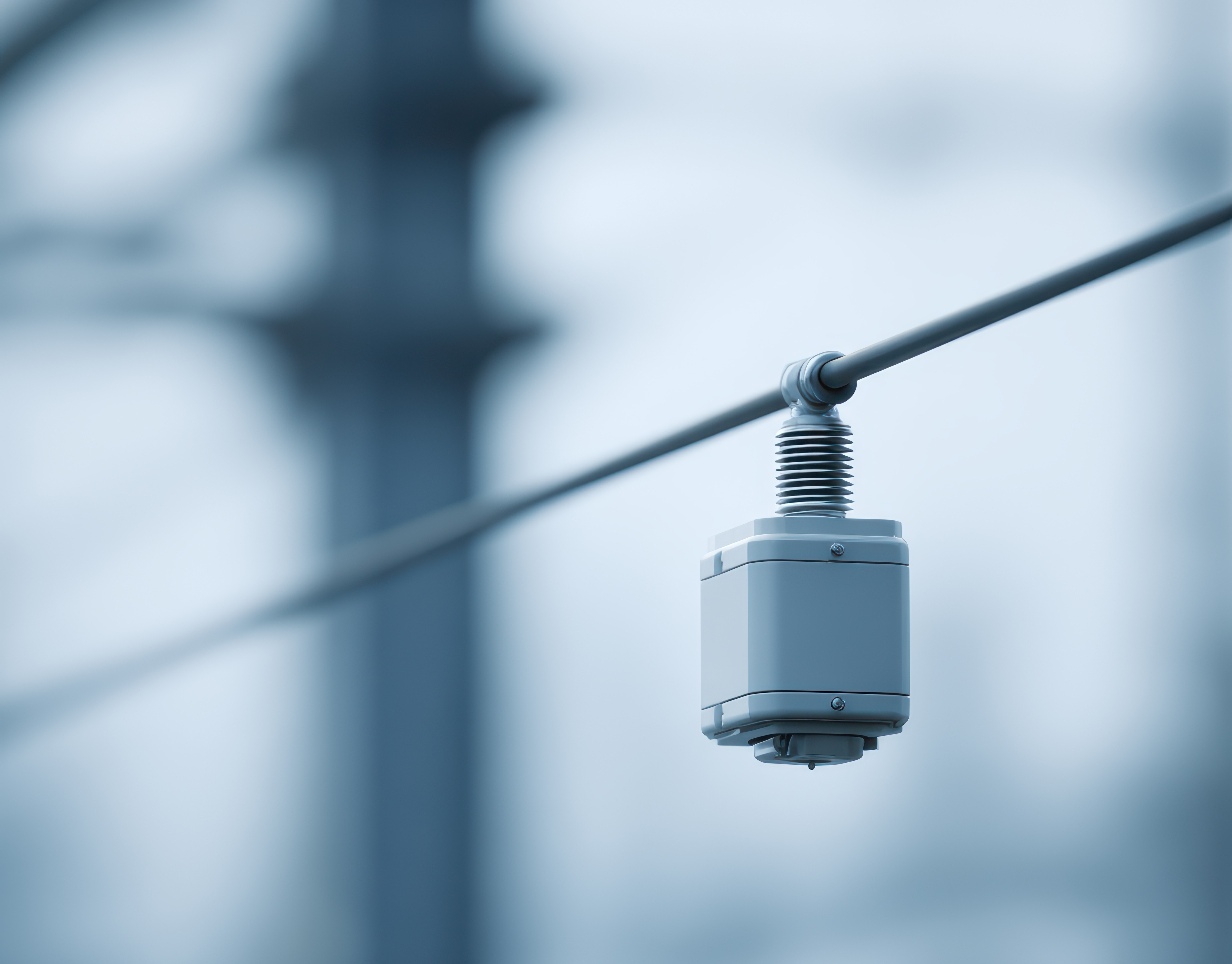
Dynamic Line Rating (DLR) is a grid management technology that enables electricity networks to make more efficient use of existing transmission lines. Traditionally, power lines are operated using conservative static limits based on worst-case weather conditions (such as high ambient temperature, no wind, full solar radiation). DLR systems instead use real-time environmental data (such as wind, temperature and solar radiation) to calculate how much electricity a line can safely carry at any given moment. By dynamically adjusting transmission capacity according to actual operating conditions, DLR enables a more accurate assessment of available transmission capacity. In practice, DLR systems may include weather stations, conductor temperature sensors, sag and tension monitoring devices and communication systems installed along transmission lines. Depending on environmental conditions and network configuration, DLR can increase the usable transmission capacity of existing lines by around 10% under moderate conditions and up to 20-30% in windy or cool environments. This enables a more efficient use of existing infrastructure, helping reduce congestion, improving renewable energy integration and deferring costly grid expansion projects. |
 |
FLEXITRANSTORE
An Integrated Platform for Incresed FLEXIbility in smart TRANSmission grids with STORage Entities and large penetration of Renewable Energy Sources
EUniversal
Market Enabling Interface to Unlock Flexibility Solutions for Cost-Effective Management of Smarter Distribution Grids
TwinEU
FARCROSS
FAcilitating Regional CROSS-border Electricity Transmission through Innovation
- Innovation Management Report
- Publishable Summary of Project Report
- Technical and market codes (pathways) to enable code harmonisation
- Executable framework for implementing pathways to cross-border harmonisation
- Cost-benefit Analysis - Impact assessment
- A novel methodology for critical span identification for Dynamic Line Rating system implementation
- A risk-based, distributed sensor installation concept for high voltage grid monitoring
- Dynamic Line Rating—An Effective Method to Increase the Safety of Power Lines
5. Digital Secondary Substation
Digital Secondary Substations help transform traditional electricity distribution networks into smarter and more responsive systems. Digital Secondary Substations (DSS) are digitalised grid nodes that connect medium-voltage (MV) and low-voltage (LV) networks while enabling real-time monitoring, automation and control of distribution grids. By continuously measuring key electrical parameters (such as voltage, current, frequency and power) and transmitting real-time data to control centres, DSS improve grid visibility, fault detection, predictive maintenance and outage management, supporting the transition from passive to active distribution network operation. DSS combine conventional physical substation equipment with sensors, protection and control devices and communication infrastructure. By providing real-time information and greater operational control, DSS help improve the reliability, efficiency and resilience of distribution networks. Depending on network digitalisation and automation levels, their deployment can reduce operational and maintenance costs by roughly 5-30%, while significantly improving real-time grid visibility and fault response times. |
 |
InteGrid
Demonstration of INTElligent grid technologies for renewables INTEgration and INTEractive consumer participation enabling INTEroperable market solutions and INTErconnected stakeholders
6. Digital Fault Recorder
As electricity systems become increasingly digitalised and interconnected, the ability to quickly detect, analyse and respond to grid disturbances is becoming ever more important for maintaining system reliability and security. Digital Fault Recorders (DFR) are monitoring devices used in power systems to detect, record and analyse electrical disturbances and fault events. By continuously measuring voltage and current signals and converting them into digital data, DFR improve fault detection, event analysis and system diagnostics, supporting faster and more reliable grid operation. DFR combine voltage and current measurement sensors with digital recording units that capture electrical disturbances when triggered by abnormal events or protection signals. They also include communication interfaces and data analysis software for fault detection, event analysis and grid monitoring. By providing detailed information on fault events and system behaviour, DFR technologies help grid operators identify issues more quickly, improve operational decision-making and reduce restoration times. Depending on network configuration and automation levels, DFR deployment can reduce fault detection and diagnosis times by roughly 20-40%, contributing to a 10-25% reduction in restoration times. |
 |